FINAL PROJECT FOR CHANDLER-GILBERT COMMUNITY COLLEGE, HST 110: GLOBAL HISTORY TO 1500, FALL A 2019 DR. VICKNAIR

Primary Sources
(https://www.shine.cn/feature/art-culture/1709113495/)
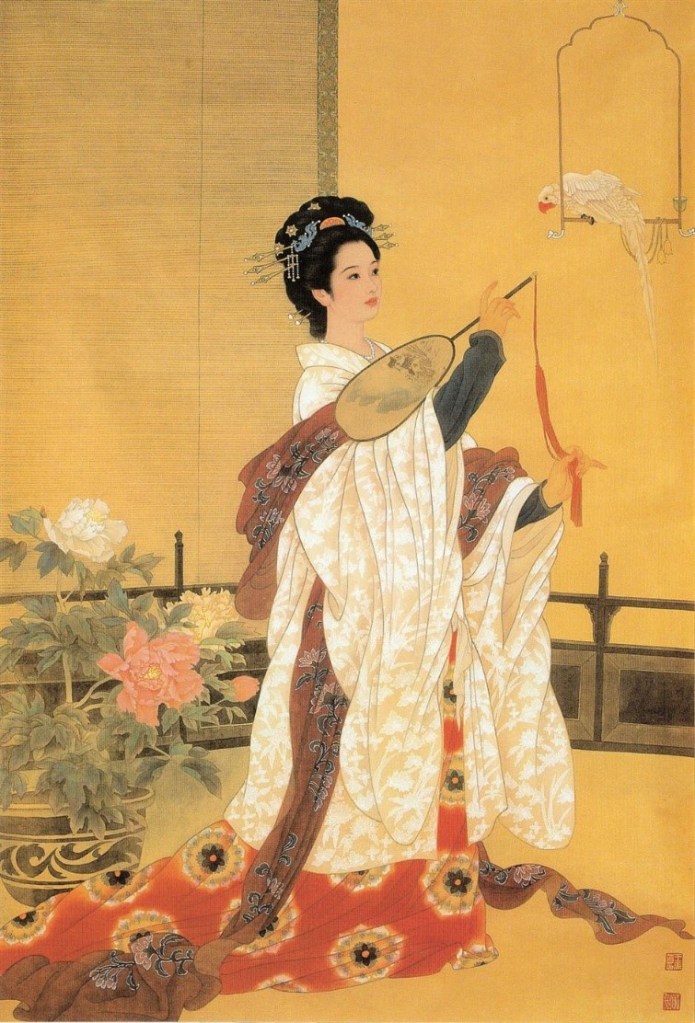
Women during the Han Dynasty were seen as inferior to men and often were treated with very little respect. However, Empress Lu Zhi was very influential lady during her reign and was a key ruler for the continuation for the Han Dynasty. Empress Lu Zhi was the wife of Emperor Gaozu who was the first ruler during the beginning of the Han Dynasty. Despite being a woman, Lu Zhi displayed her political sharpness by being a part of Gaozu’s officials and advisors. Emperor Gaozu then fell in love with another woman, a concubine named Lady Qi. Gaozu loved Lady Qi so much that he considered making their child heir to the throne, instead of his and Lu Zhi’s child, Liu Ying. Lu Zhi counteracted this by making allies with other officials securing her son to be heir until the end of Gaozu’s rule. After her husband passed, Liu Ying became emperor and Lu Zhi mutilated Lady Qi and afterwards described her appearance as a human pig. Lu Zhi then had members of Gaozu’s family in the government persecuted and replaced them with her own family. Later, Liu Ying then didn’t want to want to run the empire as he became sick and despised his mother harshness. After Liu Ying died Lu Zhi appointed one of her grandsons as emperor, when her grandson became uncooperative, she had him killed and appointed another. Despite her ruthlessness to attaining and securing power, Lu Zhi had a talent in appointing brilliant officials, treating the poor very well by lowering taxes and making their conditions better, and she heavily promoted peace (Empress Lu Zhi of Han – China’s First Reigning Empress, and History.com Editors, and Kek Koon, Wee).
(https://www.brainscape.com/blog/2015/06/6-chinese-inventions-that-changed-the-world/)
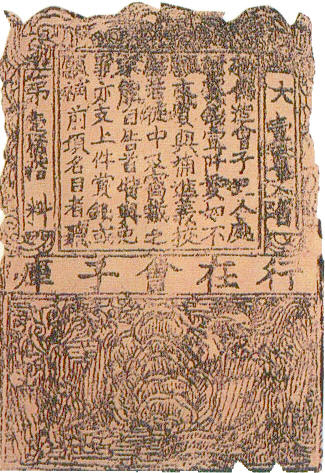
The invention of paper came from the Han Dynasty. Before paper, strips of bamboo, expensive silk, bones, and tortoise shells were being used to write on. It wasn’t until around 105 A.D. a man named Cai Lun made paper by using materials like fishing nets, bamboo, and cloth which were then pounded and soaked with water and spread flat. As the Han period was coming to an end, people kept experimenting with different materials and techniques in order to perfect it. The use of paper became widespread throughout the empire, eventually picked up by the Arab Empire, then to India, to Europe and eventually by the 16th century; America (Four Inventions of Ancient China: Paper Making, Gunpowder, Printing, Compass, and Cartwright).
(206 B.C.–A.D. 220)
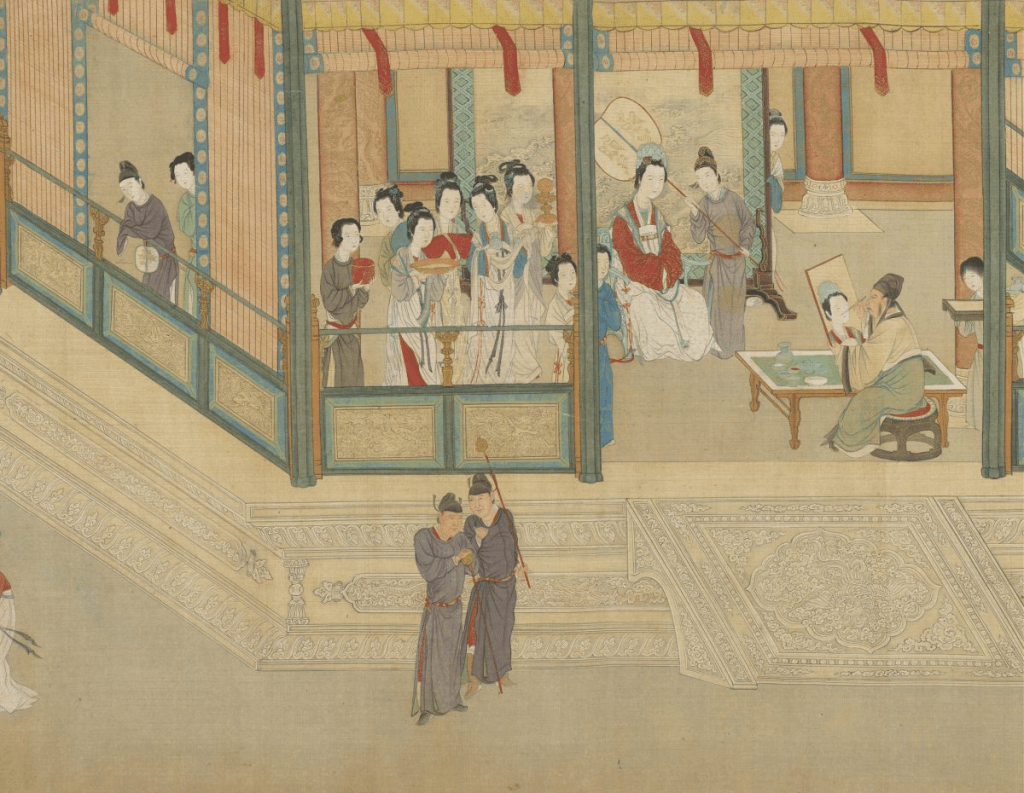
This painting was made by an artist named Qiu Ying and it was a part of a series of paintings he made in a long handscroll depicting court ladies in the Han Dynasty palace (206 B.C.–A.D. 220) called “Spring Morning in the Han Palace.” In this painting Qiu Ying wanted to illustrate the competitiveness of court life. Before an emperor chose a consort (meaning spouse or wife) it was tradition for him to be presented portraits of the ladies before meeting them. Court ladies often would bribe the illustrator to portray them as more beautiful than they actually are so that they emperor would choose them. However, the lady who’s having her portrait being made didn’t want to bribe the artist but insisted on making her look beautiful anyways. The artist then decides the manipulate the portrait drawing flaws to her face such as moles. Other people in the image includes servants and other court ladies waiting for their turn gossiping amongst each other. We can see a court lady peeking behind the screen probably wondering if the lady being painted might look more beautiful and two guards on the ground level laughing at the scene happening (2 Ancient Chinese Paintings on Humility and Integrity).
(http://factsanddetails.com/china/cat2/sub2/entry-5424.html)
(http://www.chinaonlinemuseum.com/ceramics-han.php)
(https://www.ancient.eu/article/1128/the-art-of-the-han-dynasty/)
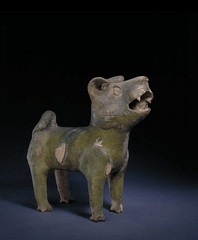
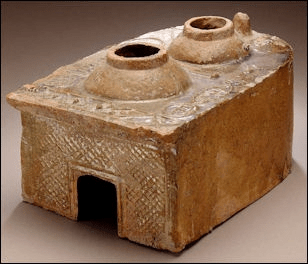
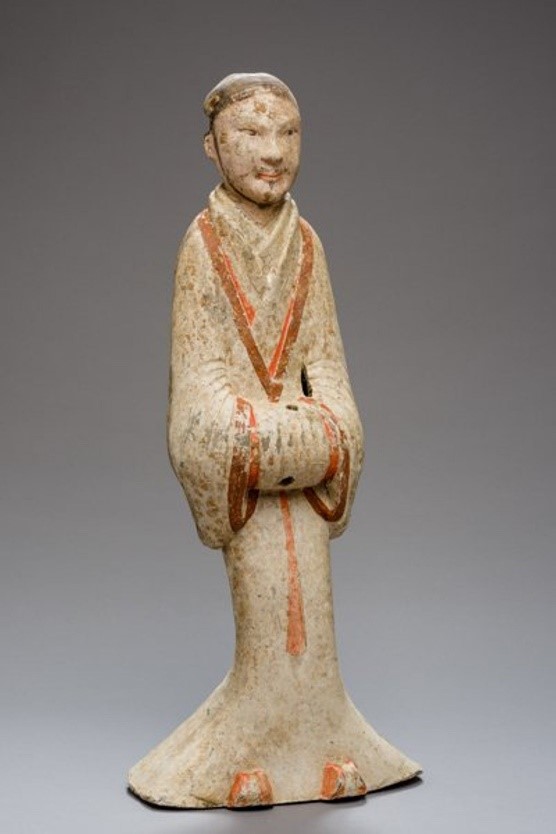
During the Han Dynasty pottery models of almost everything was made to be buried with the dead, as they believed that these were the things that they needed in the next world. These examples of pottery were found in the graves of in mainly of the rich, as they were buried with pottery statues of servants, houses stoves, pets, as well as wells. In the graves of Han women pottery of makeup boxes and cosmetics were found to be buried with them. As for emperors they were buried tombs with statues of soldiers, weapons, and chariots with horses (Anderson, 53, and Hays).
Secondary Sources

(https://library.villanova.edu/Find/Record/1271990/TOC)
(https://www.thechinastory.org/2013/12/in-conversation-with-michael-nylan/)
(https://uwapress.uw.edu/book/9780295994055/changan-26-bce/)
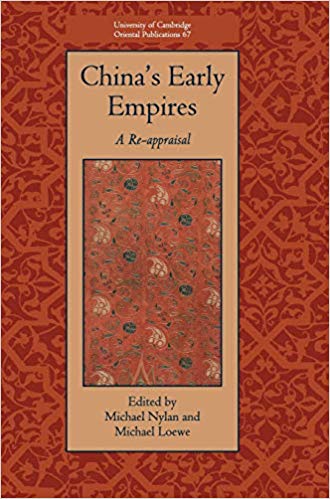
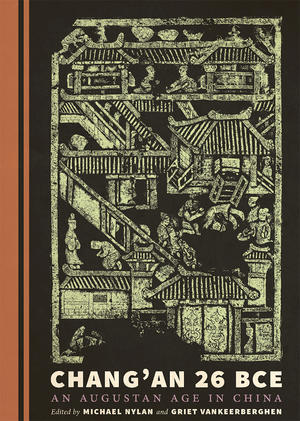
Michael Nylan is an American historian who is a professor of Early Chinese History at the University of California, Berkeley. Most of her research involves early China on the seven centuries of Warring States through Eastern Han. In her books, Chang’an 26 BCE: An Augustan Age in China and China’s Early Empires: A Re-appraisal, Nylan emphasized in what is critical into maintaining the administrative structure of China. These critical points include details on how not having harsh taxation in the state is beneficial as the social and political aspect of it could harm the state or if China doesn’t allow free subjects then it would be difficult to make an imperial army with farmers ( Michael Nylan Department of History) .
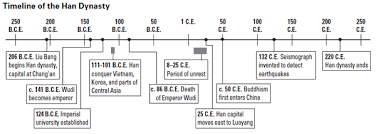
(https://1.cdn.edl.io/Ci1kHW2FckekgZJ6LgACFgavSDXABhoOyvt6C7N47k7aN2lJ.pdf)
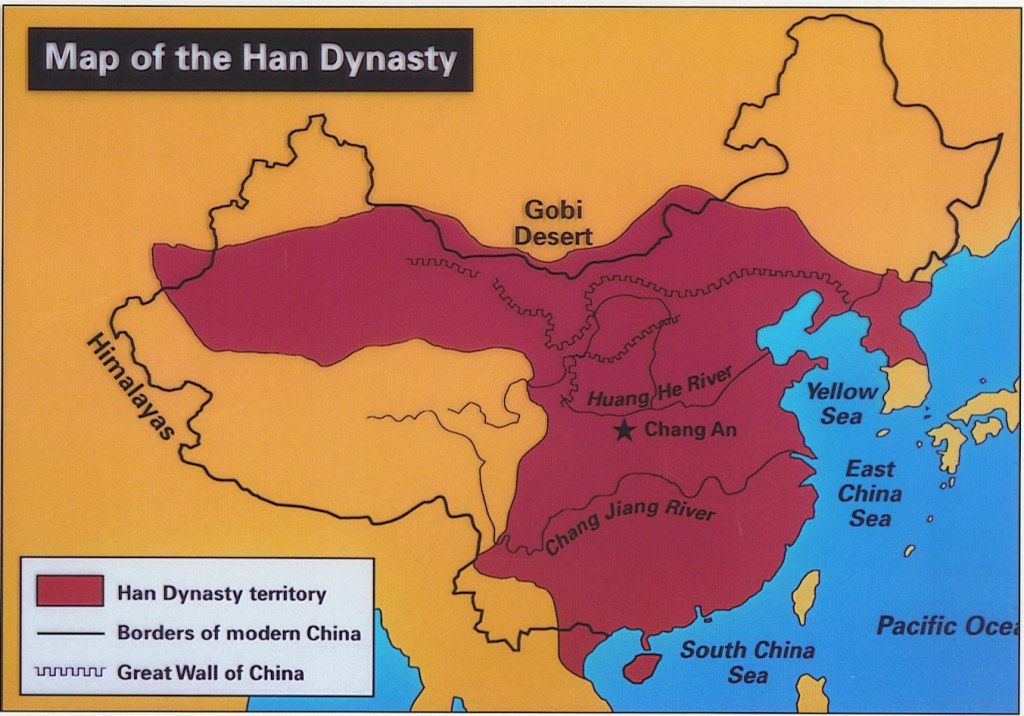
(https://thekongdanfoundation.files.wordpress.com/2018/02/power-point-mdc-class-3.pdf)
The impact of the Han dynasty still impacts the China today with Confucian ideals that are still being practiced such as the idea of your ability to do things rather than your social status. Of the many things that were created during the Han Dynasty such as inventions in agriculture and literature, I feel that the one that is the most important was the creation of paper: as it was what became so widespread among empires it would help revolutionize literature and trading and translating of texts (Cartwright). I also thought that this was the most important invention since today with new technology, we’re going towards a more paperless route with texts and information being exchanged online. But before the internet and for a very longer time, information and ideas was being exchanged on paper, something that has been refined many times throughout history.
Works Cited
“2 Ancient Chinese Paintings on Humility and Integrity.” Www.Theepochtimes.Com, 17 Sept. 2019, http://www.theepochtimes.com/two-ancient-chinese-paintings-on-humility-and-integrity_3078470.html. Accessed 10 Dec. 2019.
Anderson, E N. The Food of China. New Haven, Yale University Press, 1988.
Cartwright, Mark. “Achievements of the Han Dynasty.” Ancient History Encyclopedia, Ancient History Encyclopedia, 14 Sept. 2017, http://www.ancient.eu/article/1119/achievements-of-the-han-dynasty/.
—. “Paper in Ancient China.” Ancient History Encyclopedia, Ancient History Encyclopedia, 15 Sept. 2017, http://www.ancient.eu/article/1120/paper-in-ancient-china/.
“Empress Lu Zhi of Han – China’s First Reigning Empress – History of Royal Women.” History of Royal Women, 30 Sept. 2017, http://www.historyofroyalwomen.com/the-royal-women/empress-lu-zhi-han-chinas-first-reigning-empress/. Accessed 10 Dec. 2019.
“Four Inventions of Ancient China: Paper Making, Gunpowder, Printing, Compass.” Travelchinaguide.Com, 2016, http://www.travelchinaguide.com/intro/focus/inventions.htm.
Hays, Jeffrey. “LIFE DURING THE HAN DYNASTY (206 B.C. – 220 A.D.) | Facts and Details.” Factsanddetails.Com, 2009, factsanddetails.com/china/cat2/sub2/entry-5424.html. Accessed 10 Dec. 2019.
History.com Editors. “Han Dynasty.” HISTORY, 21 Dec. 2017, http://www.history.com/topics/ancient-china/han-dynasty#section_8. Accessed 10 Dec. 2019.
Kek Koon, Wee. “SCMP.” South China Morning Post, 30 May 2018, http://www.scmp.com/magazines/post-magazine/short-reads/article/2148446/why-one-chinas-first-empresses-was-able-ruler. Accessed 10 Dec. 2019.
“Michael Nylan | Department of History.” Berkeley.Edu, 2010, history.berkeley.edu/michael-nylan. Accessed 10 Dec. 2019.
 The Han Dynasty